The World Is Starving. The Money Just Stopped Coming.
There is enough food in the world to feed every person on it. That is not a contested fact. Why are we choosing not to send it?
The Hunger Scale
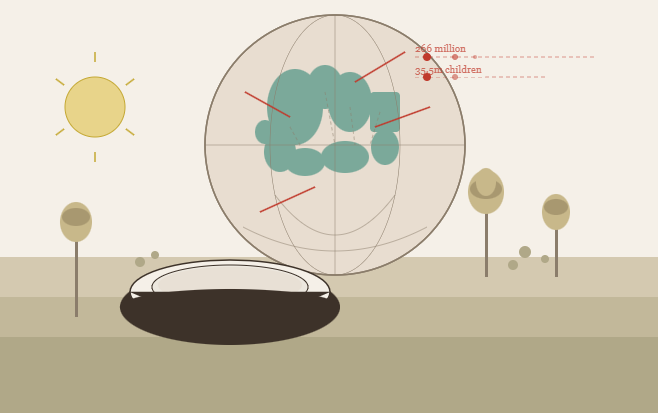
In 2025, 266 million people across 47 countries experienced acute food insecurity, meaning they were going without enough food to sustain basic health. That figure is nearly double the share recorded a decade ago. Hunger has become structural, persistent and increasingly concentrated among the world’s most vulnerable populations.
Children are bearing the heaviest load of this. For example, 35.5 million children were acutely malnourished in 2025 alone. Of this group, 10 million were suffering from malnutrition, significantly increasing risk of fatalities and developmental damage for those that survive it. These statistics alone cannot emphasise the catastrophic personal narratives of those experiencing hunger and famine. These are children whose bodies and brains are being permanently harmed due to lack of food and money.
Two famines were confirmed in 2025, that is, in Gaza and Sudan, simultaneously taking place. The shock of this comes from not war, but instead, starvation still persisting in modern humanitarian infrastructure.
Why Hunger is Getting Worse
What once used to be extreme weather causing hunger and starvation, conflict has become the leading cause. This matters, because conflict is politically driven. Ultimately, war is a decision, not some inevitability. It comes to no surprise though, that communities most devastated by food insecurity, are overwhelmingly located in places rife with political instability, conflict and displacement. Furthermore, State failures have made food systems collapse.
The crisis has not only accumulated by conflict, but also something else entirely. Money.
Collapse of Funding
The World Food Programme (WFP) is the largest humanitarian organisation that brings relief to food insecurity globally. In 2025, it faced a funding shortfall of 34 percent compared to the previous year. The consequences are dire, forcing the WFP to reduce emergency food assistance to 16.7 million fewer people that the year before. To the worlds most vulnerable nations, this meant nine out of ten people arriving at nutrition centres on foot were being turned away in Afghanistan. In the Democratic Republic of Congo, planned assistance to 2.3 million people in emergency conditions was cut to just 600,000. Haiti too was not left alone, but instead, monthly rations were halved.
The lack of funding was not because the need disappeared as we would hope, it happened because donors fled.
Under the Trump Administration, The USA slashed it’s foreign aid budget, leading to the cancellation of hundreds of millions in grants. Prior to that, they were the single largest funder of the WFP. Europe similarly redirected foreign aid budgets towards military and national security priorities.
318 million people were expected to face crisis levels of hunger in 2026 according to WFP projections, but the agency only had the funding to plan assistance for 110 million of them, and to put it plainly, even that was uncertain.
Why Does This Matter?
What you don’t see in these statistics is the erasure of coverage of data. Whilst statistics are still being produced, the 2026 Global Report on Food Crises had its lowest country coverage. Eighteen countries could not produce food insecurity data. The WFP conducted 30 percent fewer survey interviews in 2025 than the previous year. Quite quickly, we are literally going blind to the scale of the problem, when this is the very tjing we should be reading and reporting about.
Politically this is ideal, nor a coincidence. When one cannot prove the scale of the hunger crisis, it is far easier to justify the cut of funding. The invisibility becomes mechanically purposeful and political.
Hunger as a Policy Choice
There are so many versions of the causation of hunger. Most of these dishonest. It gets told as a tragedy, one in which the world is overwhelmed by crises.
Hunger at this sheer scale is nothing but a policy outcome. It is produced by the decision to fund national security and war instead of food. Food then becomes a luxury, not a human right. The decision to purposefully withdraw foreign aid while continuing to fund armed conflict turns food aid into an item that can simply be cut, when geopolitical tensions demand a performance of political endurance and strength.
The hunger crises is structural, which also means the solution is equally as structural. Food security is a global necessity, rather than what we see being produced in this article. Politics turns food into a favour extended by the Global North to the Global South, cancellable without notice.
The world is not running out of food, it is running out of empathy, data, and politicians willing to take accountability of their choices that make people starve.
Sources
UN News — Two-thirds of global hunger concentrated in 10 conflict-hit countries, April 2026 — news.un.org/en/story/2026/04/1167374
Al Jazeera — Global hunger report warns of rising malnutrition and famine risks, April 2026 — aljazeera.com/news/2026/4/24/global-hunger-report-warns-of-rising-malnutrition-and-famine-risks
World Food Programme — Food Security Impact of Reduction in WFP Funding — wfp.org/publications/food-security-impact-reduction-wfp-funding
World Food Programme — Funding cuts: six critical WFP operations at risk — wfp.org/stories/funding-cuts-six-critical-wfp-operations-risk
World Food Programme — A global food crisis, 2026 Global Outlook — wfp.org/global-hunger-crisis
Save the Children — Conflict plunged 63 million children into hunger in 2025, October 2025 — savethechildren.org/us/about-us/media-and-news/2025-press-releases/conflict-plunged-63-million-children-hunger-2025
NPR / Goats and Soda — Feeding the hungry will be harder than ever for the world's largest food aid agency, May 2025 — npr.org/sections/goats-and-soda/2025/05/06/g-s1-64385
Council on Foreign Relations — The Great Aid Recession: 2025's Humanitarian Crash in Nine Charts, December 2025 — cfr.org/articles/great-aid-recession-2025s-humanitarian-crash-nine-charts
Down to Earth — More than 266 million people face acute food insecurity; conflict main driver, April 2026 — downtoearth.org.in/food/more-than-266-million-people-face-acute-food-insecurity-conflict-main-driver
UNICEF Data — The State of Food Security and Nutrition in the World 2025 — data.unicef.org/resources/sofi-2025
Business Day — Funding cuts will lead to deepening hunger crisis, says UN food agency, November 2025 — businessday.co.za/world/2025-11-18-funding-cuts-will-lead-to-deepening-hunger-crisis-says-un-food-agency